Capsule House OEM and ODM: Private Label Guide
Capsule house OEM and ODM: private label against design-manufacture, tooling ownership, intellectual property, conformity responsibility and exclusivity terms.

OEM and ODM are often used interchangeably, and they are not. One changes how a product is presented; the other changes what the product is. The distinction determines the tooling cost, the minimum quantity, the lead time, and who can stop you from taking the design elsewhere. This page covers both for accommodation units. Supplier evaluation is covered on our manufacturer page and our manufacturer selection guide, and distribution arrangements on our dealer programme page.
Two Models With Different Boundaries
| Dimension | OEM (private label) | ODM (design-manufacture) |
|---|---|---|
| What changes | Branding, colour, packaging, documentation | Structure, layout, materials, components |
| Tooling | Usually none, or minor | Jigs, moulds or profiles — a real capital item |
| Minimum quantity | Lower | Higher, set by tooling recovery |
| Lead time | Close to standard production | Adds engineering, prototyping and testing time |
| Responsibility for performance | Stays with the existing design | Moves partially to whoever specified the change |
The practical test is simple: if the change can be undone by swapping a badge and a colour, it is OEM. If it cannot be undone without retooling, it is ODM, and it should be treated as product development rather than as purchasing.

Tooling: Who Pays and Who Owns
Tooling is the point where OEM and ODM agreements most often go wrong. Four questions must be answered in the contract, not in the email thread.
- Who funds the tooling — buyer, manufacturer, or shared against a volume commitment.
- Who owns it once paid for. Payment without ownership leaves you unable to move production.
- Whether it is exclusive. Tooling owned by the manufacturer may be used for other customers unless exclusivity is agreed.
- What happens at end of life — storage, maintenance, and whether it is destroyed or transferred.
A tooling charge that buys you no ownership and no exclusivity is a payment for the privilege of being locked in. That may still be acceptable commercially, but it should be a conscious decision.
Intellectual Property Is Two Separate Subjects
Buyers usually think about IP as "who owns the design". It is at least three questions, and they have different answers in a well-drafted agreement.
- Design and appearance rights in any new shape, panel profile or layout created for you.
- Trade dress and branding — your name, mark and livery, and confirmation that the manufacturer will not apply them elsewhere.
- Process knowledge the manufacturer brings, which generally remains theirs and cannot reasonably be transferred.
Also settle the reverse risk: whether the manufacturer may sell the same or a substantially similar design in your territory, and whether a modified version for another customer counts. Confidentiality and non-compete terms should cover drawings, specifications and pricing, with a stated duration that survives the end of the supply relationship.

Quality and Conformity Responsibility Does Not Transfer by Default
Applying your brand to a unit does not make you the manufacturer in the eyes of most regulators, and it does not make the manufacturer responsible for your market. Allocate responsibility explicitly:
- Who holds product conformity evidence, and whether it covers your modified configuration rather than the base model.
- Who is the responsible party for the market you sell into, and what that requires.
- Who handles defects discovered after installation, and within what response time.
- Whether spare parts are supplied under your brand or the manufacturer's, and for how long after the last order.
Ask for conformity documents and verify them with the issuing body where that is possible. We make no claim to held certifications; request what exists and check it. Requirements may vary by application, market and applicable standard.
Exclusivity: Price It Before You Ask for It
Exclusive territory is a commercial asset with a cost. Manufacturers usually price it against a volume commitment, a term length, and a definition of territory that includes whether online sales count. Before negotiating exclusivity, decide what it is worth to you: if your advantage comes from local service, brand and site relationships, exclusivity may matter less than a reliable supply agreement and a strong spare parts arrangement.
Where exclusivity is agreed, define the consequences of missing the volume commitment, and the notice period for ending it.
Prototyping and Validation for ODM
An ODM change is product development, and it should be planned as such: design, prototype, validation, then production. Budget both time and money for the prototype stage and decide what the prototype is for — a structural or thermal check, a buildability check, or a presentation sample for your sales channel. Those are different objects with different costs. Agree what happens to the prototype afterwards, whether it is shipped to you, and whether its cost is credited against the production order.
Validation is the step most often skipped. If the change affects structure, envelope performance or fire behaviour, the modified configuration needs to be assessed, and any conformity evidence must cover the modified product rather than the base model. Ask the manufacturer what can be tested and what evidence can be issued, and verify it with the issuing body where possible.
After-Sales Under Your Brand
Once the product carries your brand, customers will call you. That is unavoidable, so decide how it is handled before the first unit ships. Three models exist: the manufacturer supports your customers directly under a service agreement; you provide first-line support and escalate; or you build your own service capability with training and parts from the factory. Each has a cost and each implies a different spares arrangement. Then settle the commercial questions: response time commitments, who funds warranty labour, whether warranty claims are settled in parts or in credit, and how long components remain available after the last order.
Clauses Worth Insisting On
- Specification freeze and change control — how a change is requested, priced and scheduled, and what it does to the delivery date.
- Confidentiality covering drawings, specifications, pricing and volumes, surviving termination for a stated period.
- Tooling ownership and exclusivity as separate clauses, with the consequences of a missed volume commitment stated.
- IP allocation for anything newly created, and confirmation that the manufacturer's pre-existing process knowledge stays theirs.
- Quality acceptance criteria with a defined inspection method and a stated rectification route.
- Termination and transition — notice period, treatment of work in progress, and whether you may buy out remaining stock or tooling.
None of these are unusual requests. A manufacturer experienced in private label will have a position on each one, and the way they answer tells you more about the relationship than the price does.
Start With Private Label, Move to ODM
For most buyers the sensible sequence is to begin with private label and move to a design change only after volume justifies it. Private label tests the market, builds brand presence and generates sales data with almost no capital at risk. Once you know which configurations sell and in what volume, an ODM change can be specified against real demand rather than a forecast, and the tooling cost can be justified against a number you have evidence for. Buyers who begin with ODM are underwriting tooling with an assumption.
What to Send Us
Send your market, whether you need private label or a design change, target annual volume, territory and the standards or conformity evidence your market requires. We will state what is feasible, what tooling or minimum quantities apply, and what must be resolved locally. Our RFQ template helps structure the enquiry; send your details through the contact page.
More from the Blog

Capsule Home Cost Guide: What You Really Pay in 2026
EXW, shipping, install and the hidden line items — a transparent breakdown of total landed cost.
Read article →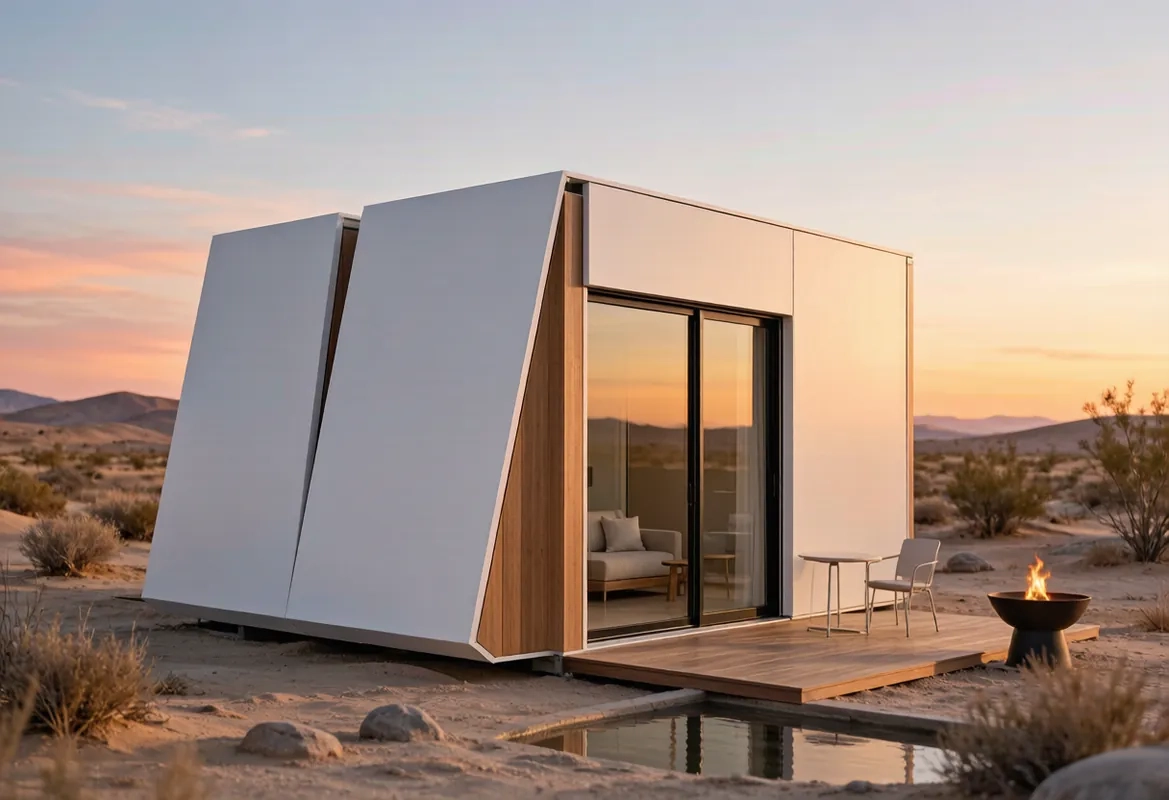
How to Install a Capsule Home in 3 Days: A Step-by-Step Guide
From site prep to first guest — the exact sequence our install crews follow on every deployment.
Read article →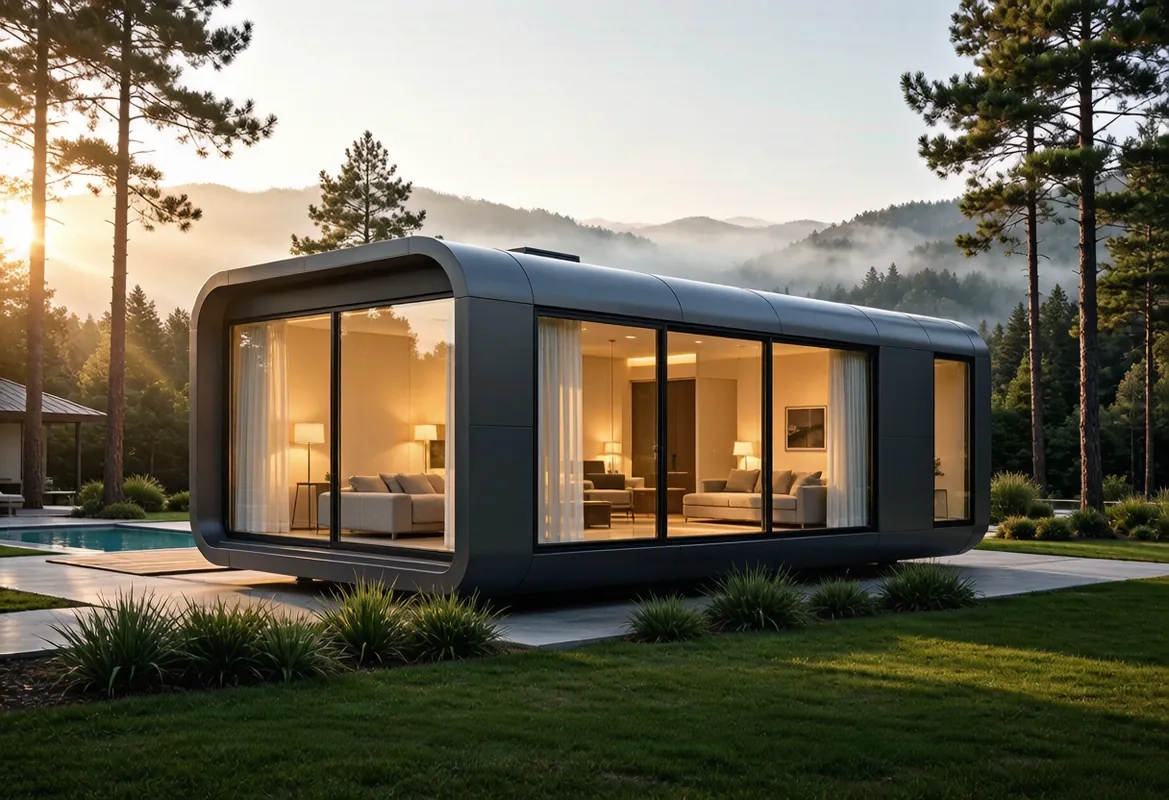
Real Owners, Real Numbers: Success Stories
How a lakeside resort, a Spanish glamping site and a Singapore dealer hit their targets.
Read stories →Talk to the Factory
Ready to Ride the 2026 Wave?
Get the latest catalog, pricing tiers and a layout sketch for your land — straight from the engineering team.