Off-Grid Capsule House Indonesia: Power Planning
Off-grid power and water planning for capsule houses in Indonesia: supply capacity, autonomy, generator backup, water supply and disposal, salt exposure.

On an Indonesian island site, the question is not whether to generate your own power. It is what capacity the local grid can actually deliver, how often it is unavailable, and how much of that gap you intend to cover with storage, generation or simply accepting a lower service level. This page covers power and water planning for Indonesian island and remote sites. General off-grid principles are covered on our off-grid utilities page; structural questions are on our seismic design page and approvals on our Indonesia compliance page.
Start From the Supply, Not the Load
Most off-grid designs fail in the same direction: the array and battery are sized against a load list written before anyone asked what the local supply can provide. Invert the order.
- Establish the available supply in writing: connection capacity, voltage and phase, and whether the supply is metered and billed commercially or residentially.
- Establish the reliability record from the operator or from neighbours: outages per month, typical duration, and whether outages are scheduled or unplanned.
- Establish the fuel and delivery reality for any backup generation: distance to a fuel source, whether deliveries are by road or by boat, and what a delivery failure looks like in storm season.
With those three facts, the design choice becomes narrow and defensible. A site with a stable grid and short outages needs a small battery and no generator. A site with daily multi-hour outages needs generation, whatever the solar resource looks like. Solar output is a seasonal average; an outage is a specific event at a specific hour.

Sizing Storage Against Autonomy, Not Against the Array
Battery capacity is an autonomy decision. State the number of hours of full service the site must survive without generation or grid, then size to it. That number is a commercial decision before it is an engineering one: it determines whether guests notice anything when the supply fails.
| Service level | What stays on | Design implication |
|---|---|---|
| Lighting and refrigeration only | LED circuit, fridge, water pump | Smallest system; air conditioning is unavailable during outages |
| Comfort maintained | Above plus fans and partial cooling | Larger bank and inverter; cooling load dominates the sizing |
| Full service | Above plus full cooling and kitchen | Generation is effectively required; storage alone becomes expensive |
Cooling is the load that decides everything else. A unit that needs cooling to be rentable in a humid lowland site has a materially larger power problem than the same unit on a highland site where nights are cool. Specify the cooling load before the array, and check whether the unit's insulation and glazing specification reduce it — envelope performance and power system size are one decision, not two.
Generation as a Stated Backup, Not a Hidden One
A generator is not a failure of design; an unplanned generator is. Decide explicitly whether the site has one, and if so, size it to run the whole unit or to run a defined partial load. Then plan for what it costs to keep it running: fuel storage volume, delivery frequency, noise separation from sleeping areas, exhaust routing, and servicing by someone who is actually on the island.
Set the changeover behaviour deliberately. Automatic start on outage protects the guest experience and consumes fuel; manual start consumes goodwill. Whichever you choose, test it during commissioning with the grid disconnected, not on paper.
Water: Supply, Storage and Disposal
Water planning separates supply from disposal, and most problems occur on the disposal side because it is the less visible half.
- Supply. Rainwater harvesting is viable where the roof area and rainfall support it, but it imposes a storage volume and a dry-season risk. Mains, borehole and delivered water each carry their own reliability and quality profile. Ask for water quality test results rather than assuming potability.
- Storage. Tank volume determines how long a delivery failure can be absorbed. Place tanks where they can be cleaned and where the weight is carried by a designed support, not by a deck.
- Greywater and blackwater. Septic capacity depends on soil percolation, which varies sharply between sand, volcanic and clay sites. Confirm the disposal route before finalising the layout, because a tank that cannot be emptied becomes a permanent operational problem.
Requirements may vary by application, market and applicable standard.

Humidity, Salt and Heat Are One Specification
Indonesian sites combine three stresses that act on the same components. Humidity drives condensation inside enclosures and on cold surfaces. Salt drives corrosion of fixings, brackets and heat exchanger fins. Heat reduces the usable output of PV modules and shortens battery life where the bank is not ventilated.
Specify against all three at once: enclosure rating for outdoor electrical items, material grade for external fixings, ventilation and shading for battery and inverter locations, and a maintenance rhythm that includes rinsing salt deposits and checking torque on external connections. Our Indonesia page covers the wider market context.
Commissioning Tests Worth Writing Down
An off-grid system that has never been tested under load will fail on the first night of occupancy, which is the worst possible moment. Specify these tests during commissioning and record the results.
- Full-load test with every circuit energised for the stated autonomy period, not a partial-load spot check.
- Transfer test with the grid or the generator disconnected, confirming changeover behaviour and that sensitive equipment survives it.
- Generator run at its rated output for a sustained period, with fuel consumption recorded rather than assumed.
- Water system test: tank fill, pump operation, and a full drain-down of the disposal side.
- Verification that enclosure ventilation and shading are actually installed as specified, not substituted during site works.
Test results belong in the handover pack. They are also the reference for any later warranty discussion.
Operating Cost Is the Part Left Out of the Design
Capex for an off-grid system is visible and gets scrutinised; opex is diffuse and gets discovered. Three recurring lines dominate: fuel where generation is used, battery replacement cycles, and the labour cost of someone who can actually service the system. On a remote island the third is often the largest, because it includes travel time and because the alternative is downtime. Confirm before ordering who will service the equipment, how often, and what the travel cost is per visit. Where service capability is genuinely absent, favour a simpler system with fewer failure modes over a sophisticated one that nobody can repair.
What the Factory Can and Cannot Decide
Factory-side decisions determine how much of this is pre-installed and tested before shipping: cable routes and containment, ventilation openings, equipment mounting provisions, and whether the unit arrives with an electrical system configured for the site's voltage and frequency. Site-side decisions — array orientation, tank placement, septic design and earthing to local ground conditions — depend on survey data only the site team holds.
Split the scope in writing. The most expensive outcome is a unit arriving with site-dependent work already fixed in a configuration the site cannot accept. Cost context for the market sits on our Indonesia price page.
What to Send Us
Send your island or region, available supply and its reliability, whether a generator exists, water source and disposal route, distance from the coast and your target occupancy. We will advise what can be built and tested in the factory and what must be resolved on site. Review the Galactic A series configurations and send your details through the contact page.
More from the Blog
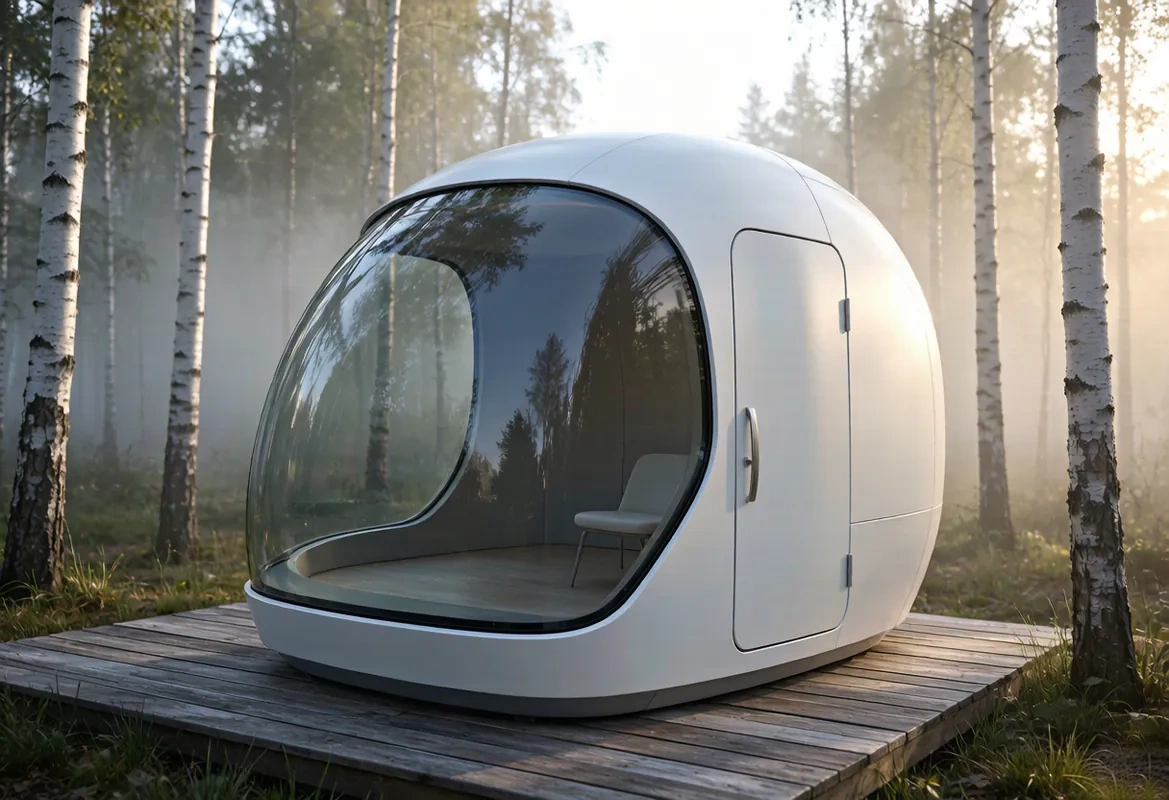
Capsule Home Cost Guide: What You Really Pay in 2026
EXW, shipping, install and the hidden line items — a transparent breakdown of total landed cost.
Read article →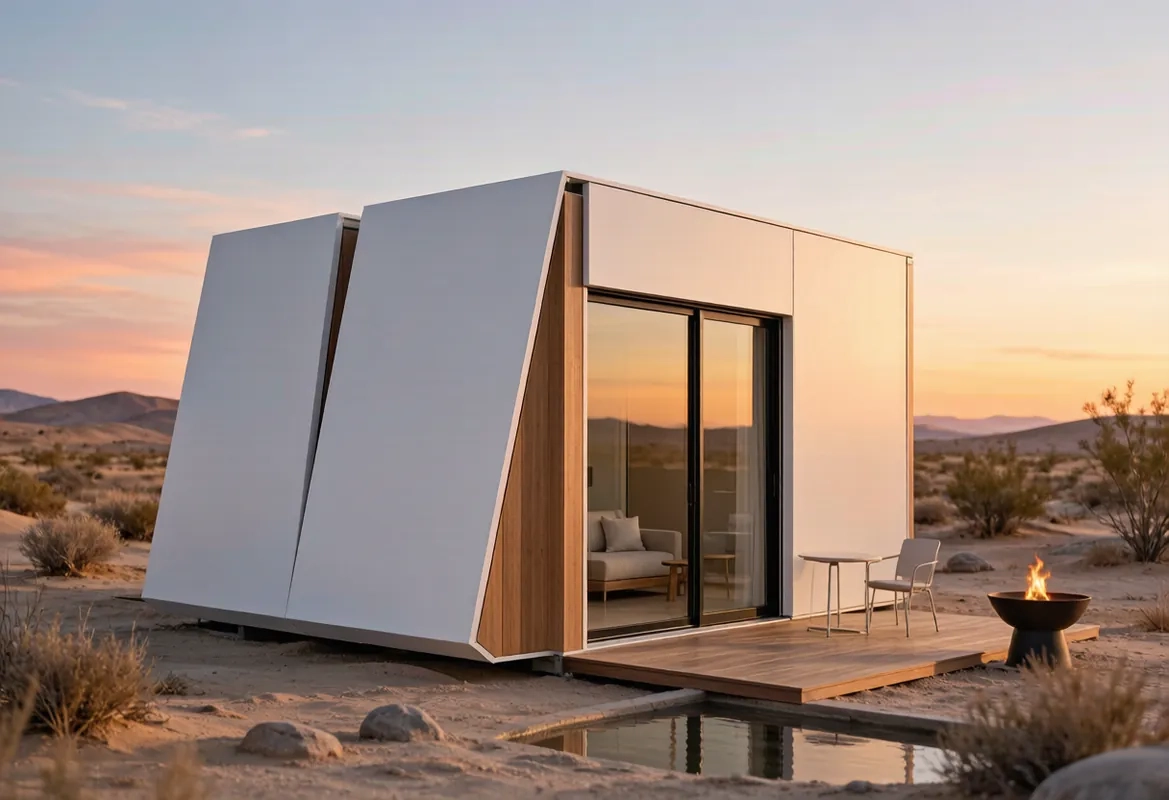
How to Install a Capsule Home in 3 Days: A Step-by-Step Guide
From site prep to first guest — the exact sequence our install crews follow on every deployment.
Read article →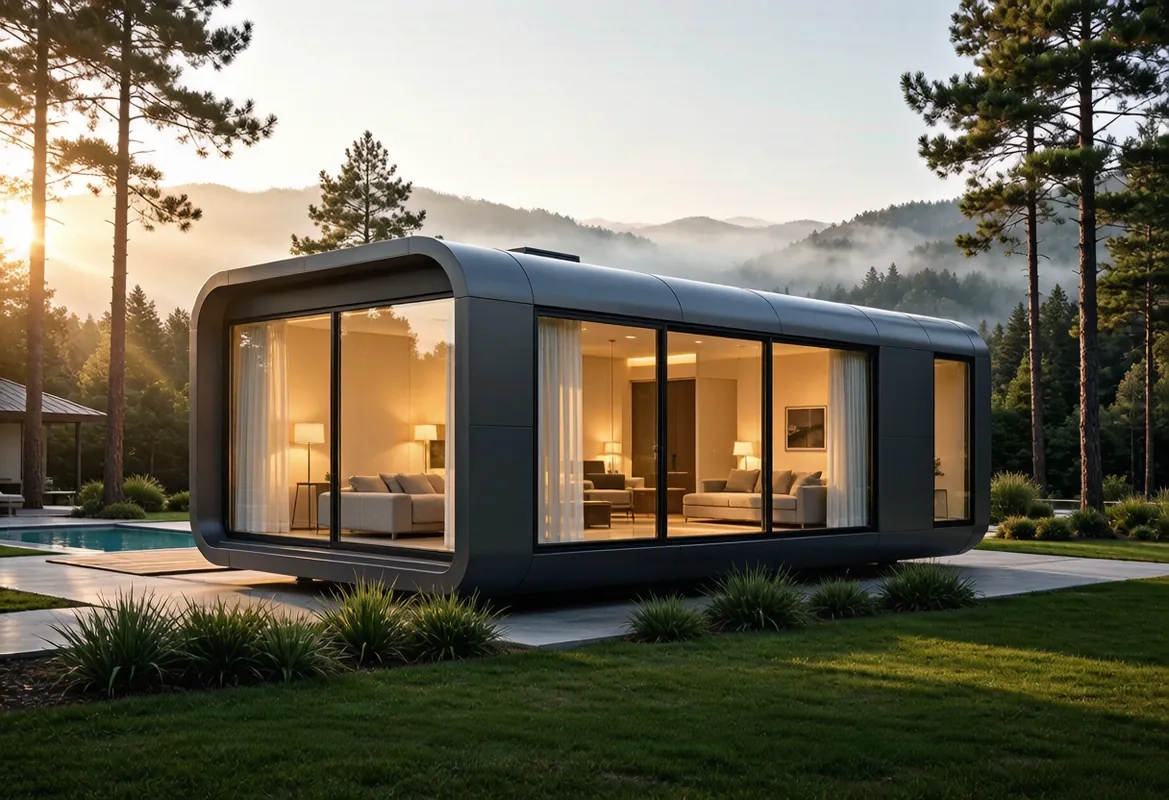
Real Owners, Real Numbers: Success Stories
How a lakeside resort, a Spanish glamping site and a Singapore dealer hit their targets.
Read stories →Talk to the Factory
Ready to Ride the 2026 Wave?
Get the latest catalog, pricing tiers and a layout sketch for your land — straight from the engineering team.