Capsule House UAE Fit-Out: Buyer Timeline Guide
Capsule house fit-out in the UAE: the sequence from unit arrival to a lettable room, and how summer working patterns and port lead time move it.

A capsule house fit-out in the UAE is the sequence between the unit landing on the plot and the room being lettable, and in most projects it is the part of the programme that slips. The unit arrives in a known condition; what follows is a chain of trades, deliveries and approvals that all have to arrive in the right order, in a climate where the summer working day is shorter and material lead time through the ports is rarely the number in the quotation. This page sets out the fit-out sequence in the order a Gulf project actually runs it: interior finishing, joinery and appliances, glazing and shading verification, service energisation and inspection, then snagging and defect close-out — and how the calendar moves in summer. National planning context is in the capsule house UAE guide, budget context in capsule house price in the UAE and the general capsule house price page, and the cost structure of getting a unit connected and standing is part of capsule house installation cost.
Fit-out is a programme, not a task
The reason fit-out slips is that it looks like one trade and is really six, each waiting on the one before. Joinery cannot be fitted before the interior surfaces are finished. Appliances cannot be commissioned before power is energised. Power cannot be energised before the connection is inspected. The inspection cannot happen before the unit is safe to enter and the route to it is clear.
Write the sequence out as a programme with dependencies before the unit ships, and name the responsible party at each step. The two questions that decide the length of the whole exercise are simple: who holds the keys between trades, and who is on site when a delivery arrives.
Stage one: interior finishing and making good
Start with anything that produces dust or needs open access. Making good after installation — joint touch-ups, threshold seals, floor transitions, any damage from handling — belongs first, because it is messy and because later trades will not thank you for it.
Check at this stage that the interior is dry and that the cooling has been running before absorbent materials are installed. A unit that has travelled in a container holds moisture, and fitting joinery against a cold, damp surface in a Gulf summer is how a fit-out acquires a mould problem before it opens.
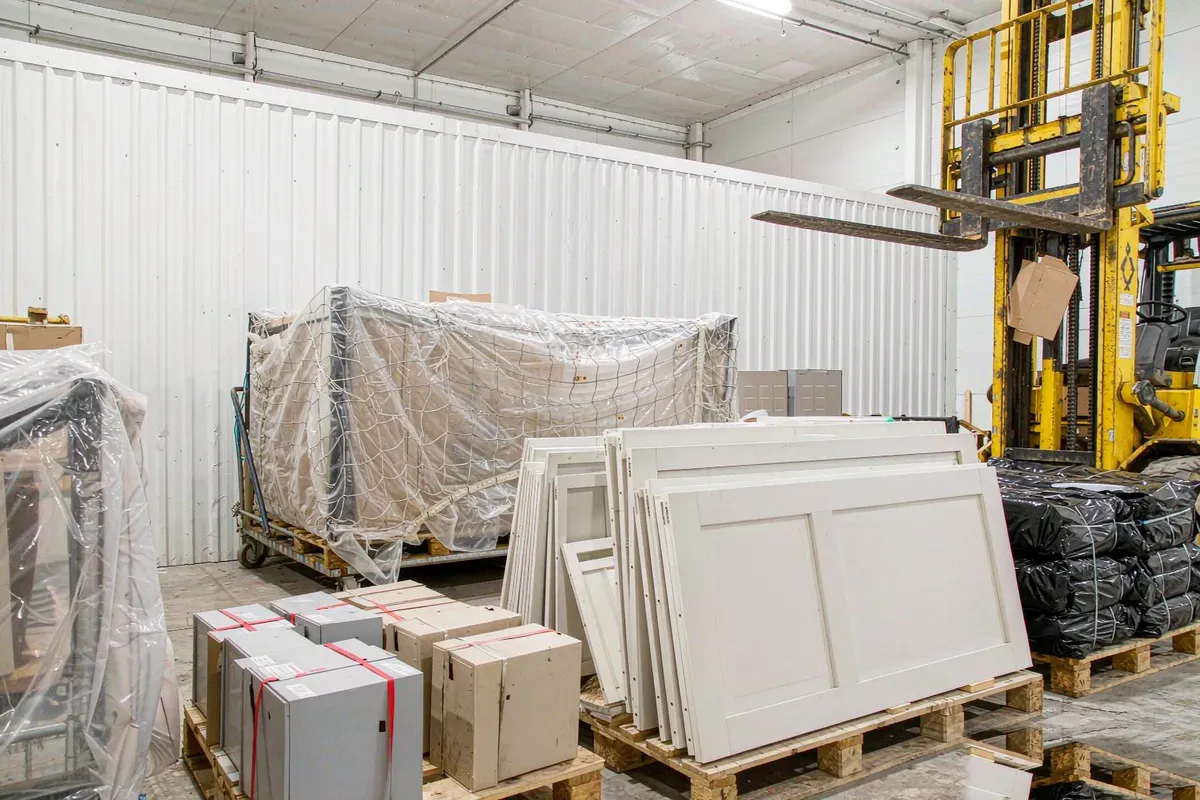
Stage two: joinery, soft furnishing and appliances
Sequence the interior fit by access rather than by room: everything that needs wall access first, then floor-standing items, then soft furnishing and bedding last. Appliances should be commissioned as they are installed, not at the end, because a dead appliance discovered on handover day has already consumed the whole programme.
Two specification points matter more in the Gulf than elsewhere. The first is heat: any appliance or control placed in direct sun or behind glass will run hotter than its rating assumes. The second is sand: intake filters and door seals need an accessible maintenance route, or they will not be maintained.
Stage three: glazing and shading verification
Before the unit is handed for use, walk the envelope. Operate every window and door, confirm the latches hold, and check the seals are continuous. Confirm external shading is installed and secure, because on a Gulf plot shading is not a comfort item — it is what keeps the cooling load inside the design assumption and the interior surfaces from being cooked while the unit is closed.
Photograph the glazing and shading in the installed state. These photographs are the baseline for any later glass or seal conversation, and they are also the evidence that the shading was fitted before the summer rather than after the first complaint.
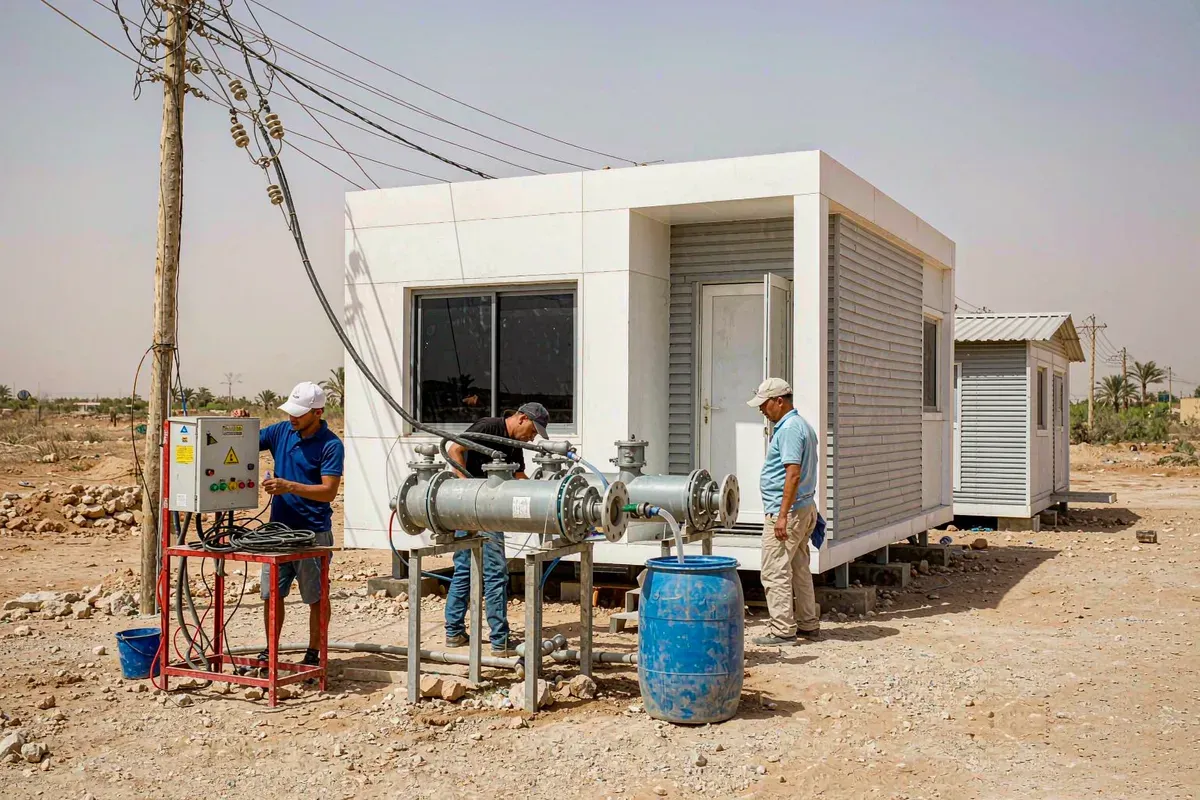
Stage four: services energisation and inspection
The utility connection itself — what is connected, at what capacity, and how the connection is made safe — is a separate engineering subject and is covered in the installation cost and utility pages. What belongs to fit-out is the gate: services cannot be energised until the connection has been inspected and passed, and the inspection will not be booked until the unit and the route to it are ready.
Prepare for that inspection as a scheduled event. Have the installation record, the earthing and protective device schedule, and clear access to the connection point. A failed first inspection costs more in calendar time than in money, because it usually re-books into another week.
Stage five: snagging and defect close-out
Snagging is the walk-through that converts a finished unit into an accepted one. Run it with a written list, in daylight, with the cooling running, and with every system operated rather than looked at. Group the findings by severity: anything that affects safety or prevents letting first, cosmetic items second, and anything that needs a part ordered logged separately with a date.
Close out in writing. A snag list that is discussed and not signed is a snag list that will still be open at handover, and at that point it becomes a commercial argument instead of a work instruction.
How the summer calendar moves the programme
Two effects are specific enough to plan around in the Gulf.
Working patterns
Outdoor and semi-outdoor work is restricted or rescheduled through the hottest part of the day in the summer months, and productivity per hour falls even where hours are maintained. Plan the exterior-dependent stages — shading, external sealing, connection works — for the cooler months or for the early part of the day, and do not build a programme that assumes the same daily output in August as in February.
Lead time through the ports
Material for a fit-out rarely arrives on the lead time quoted at order. Consumables, joinery, appliances and glazing spares come through the same ports, and a single missing item at the wrong moment stops a trade for a week. Two mitigations: order the long-lead items before the unit ships, and hold a small consumable stock — sealant, filters, fixings — on site from the first delivery.
A workable sequence
| Stage | Depends on | Output |
|---|---|---|
| Interior finishing and making good | Unit placed, dry, cooled | Surfaces ready for joinery |
| Joinery, furnishing, appliances | Finishing complete | Interior complete and items tested |
| Glazing and shading verification | Envelope accessible | Photographic envelope record |
| Energisation and inspection | Connection ready, access clear, documents held | Services live, inspection passed |
| Commissioning | Services live | Systems tested under load |
| Snagging and close-out | Commissioning complete | Signed defect list and acceptance |
What to fix before the unit ships
- Decide who holds site access and keys between trades.
- Order long-lead interior items before dispatch, not after arrival.
- Confirm the cooling is running before absorbent materials are fitted.
- Book the connection inspection as a date in the programme, not as a task to arrange later.
- Hold consumables and a small spares stock on site from the first delivery.
- Photograph the envelope and the interior at every completed stage.
Approval steps, inspection requirements and any associated fees are set by the authority having jurisdiction in the relevant emirate and should be confirmed against the current requirements for your plot and use. Requirements may vary by application, market and applicable standard.
More from the Blog

Capsule Home Cost Guide: What You Really Pay in 2026
EXW, shipping, install and the hidden line items — a transparent breakdown of total landed cost.
Read article →
How to Install a Capsule Home in 3 Days: A Step-by-Step Guide
From site prep to first guest — the exact sequence our install crews follow on every deployment.
Read article →
Real Owners, Real Numbers: Success Stories
How a lakeside resort, a Spanish glamping site and a Singapore dealer hit their targets.
Read stories →Talk to the Factory
Ready to Ride the 2026 Wave?
Get the latest catalog, pricing tiers and a layout sketch for your land — straight from the engineering team.