Capsule House Site Access Philippines Last Mile
Capsule house site access in the Philippines: route survey, gate and turning space, culvert limits, crane pad bearing, staging and a readiness checklist.

The last mile decides whether a capsule house in the Philippines actually reaches its foundation. Most delivery failures are not factory failures and not shipping failures; they happen on the final stretch between the national road and the pad, where a barangay road is narrower than the turning circle, a culvert was built for a jeepney rather than a trailer, or a yard that looked firm in the dry season will not carry a crane in September. This page is about that stretch: how to survey it, what to fix before the truck is booked, and who pays for what. Sea and inter-island shipping, customs and import procedure, and general country guidance are separate subjects and stay in island delivery and inter-island logistics, with the market context in the capsule house Philippines guide. Budget context sits in capsule house price in the Philippines and the general capsule house price page. No permit number, fee or load-rating figure is quoted here as fact; survey the route and confirm with the authority having jurisdiction. Requirements may vary by application, market and applicable standard.
Why the last mile is a separate project
A factory can produce on schedule, a vessel can sail on schedule, and the unit can still sit at a provincial port or on a roadside for a week. The reason is that the last mile is usually owned by nobody in particular. The freight forwarder's contract typically ends where the road surface stops being able to carry the vehicle. The site contractor's scope typically starts at the gate. The owner assumes both cover the gap.
Three characteristics make this worse in the Philippines than in a market with uniform infrastructure:
- Road hierarchy changes quickly. A national road that takes a full trailer without complaint can hand over to a municipal road, then to a barangay road, then to a private track, with no signage announcing the change in capacity.
- Surface condition is seasonal. Unpaved or partly paved sections behave very differently in dry months and in the wet season, and delivery schedules are often set months ahead of the weather they will meet.
- Overhead obstruction is common. Low-hanging distribution lines, cable television drops, bamboo arches over a resort entrance and mature trees all sit at heights that a standard container trailer or a crane boom will not pass under.
Survey the route before the order ships
The single most useful piece of work is a physical route survey, done by somebody who will be present on delivery day, driving the route in a vehicle of similar size. A written survey beats a telephone confirmation from a supplier who has never seen the barangay road. Record:
- Road width at the narrowest point, including the effective width once parked vehicles, drainage and vegetation are accounted for.
- Surface type and condition for each segment: concrete, asphalt, gravel, earth, and whether there is a crown, a camber or a soft shoulder.
- Every bridge, culvert and drainage crossing on the route, with a note on what is currently using it.
- Overhead lines, their approximate height, and the utility that owns them.
- The gate: width, hinge swing, whether it can be temporarily removed, and the turning space on both sides.
- The pad itself: dimensions, level, bearing, and the working space around it.
Photograph everything and mark it on a plan with chainage. The output is not a report; it is a list of works with owners and dates. That list becomes the site readiness schedule that runs alongside production.
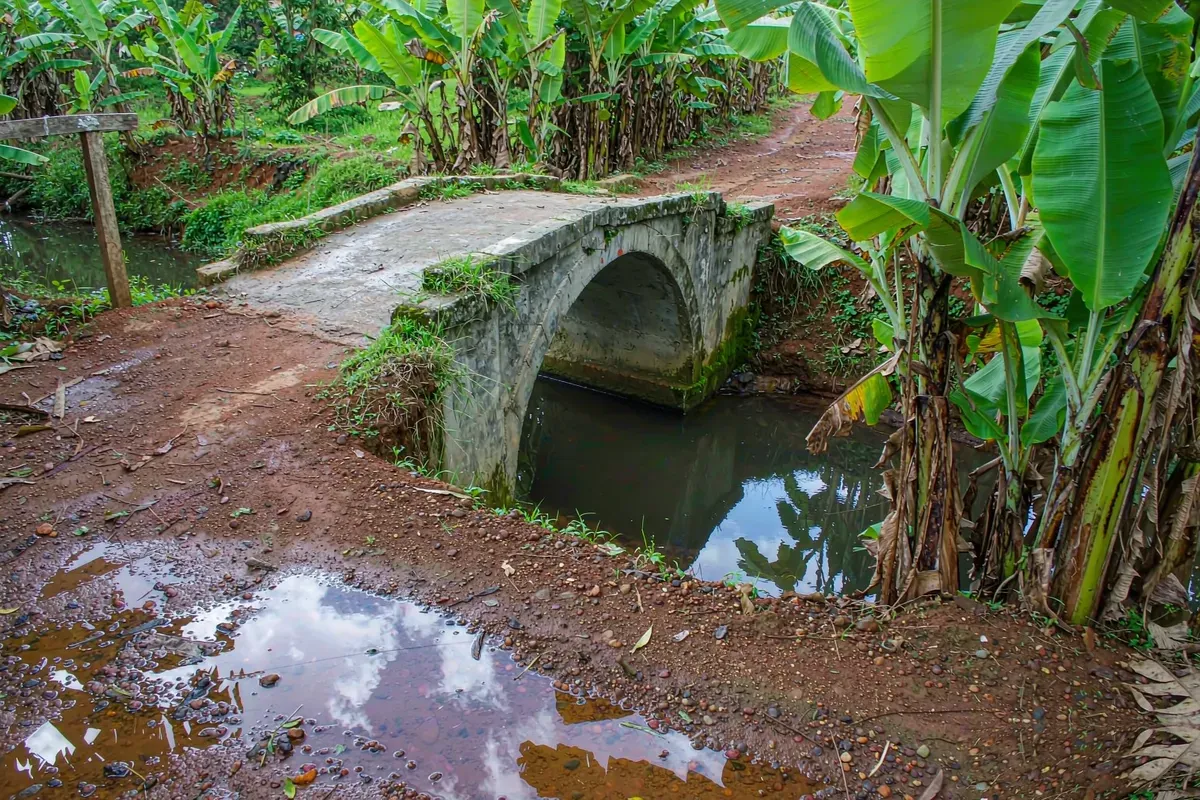
Crossings and overhead lines
A culvert or small bridge is the item most often discovered on delivery day. Many were built for agricultural or light vehicle loading, and a truck and trailer combination concentrates weight on a short wheelbase in a way local traffic never does. The correct response is not to guess a capacity. It is to have a qualified local engineer look at the structure, and if the answer is uncertain, to build a bypass or a temporary crossing rather than to test the existing one with a loaded trailer.
Overhead lines are more tractable. The distribution utility can usually arrange a temporary lift, a protective sleeve or a shutdown for a crossing, but this takes notice and a fee and it is not arranged in an afternoon. Identify the owner early, because the coordination time is often longer than the work.
The gate, the turn and the staging area
Three geometric questions decide whether the delivery vehicle can place the unit directly or whether it must be transferred:
- Gate width versus trailer width, with margin for the mirror and the swing. Where the gate cannot be widened, temporary removal of a leaf or a section of fence is often simpler than a new gate.
- Turning radius. A trailer that arrives nose-in on a dead-end track may have no way to reverse out. If the site cannot offer a turning loop or a hammerhead, plan for the vehicle to reverse in under guidance, or plan a transfer point.
- Staging area. A firm, level, accessible area where the unit can be set down and stored for a day or two decouples the transport schedule from the crane schedule. Without it, a delayed crane means a delayed truck, and demurrage or waiting time is charged.
Where no direct placement is possible, the fallback is a transfer: unload at the staging area onto a smaller vehicle or a trailer that the site roads can take, then move the unit the final distance. This is double handling, it needs its own lifting plant and its own risk assessment, and it should be priced as a known option rather than discovered as an emergency.
Ground bearing after rain
The most expensive last-mile surprise is ground that was firm when the site was visited and is not firm when the crane arrives. A tropical site with a clay or silt surface can carry a light vehicle in March and rut deeply under a crane outrigger in October. Two precautions are standard:
- Design the crane standing area as a structure, not as a surface. Compacted granular fill of specified depth, or steel plates or mats over the prepared area, spreads the outrigger load. The lifting contractor should state what bearing capacity the ground needs to provide; that statement, not a rule of thumb, is what the site works are built to.
- Plan the delivery window around the season. Where the site is marginal, accept that the sensible delivery months are limited and set the production and shipping schedule accordingly. A unit that waits three months in the factory costs far less than one that waits three weeks on a roadside.
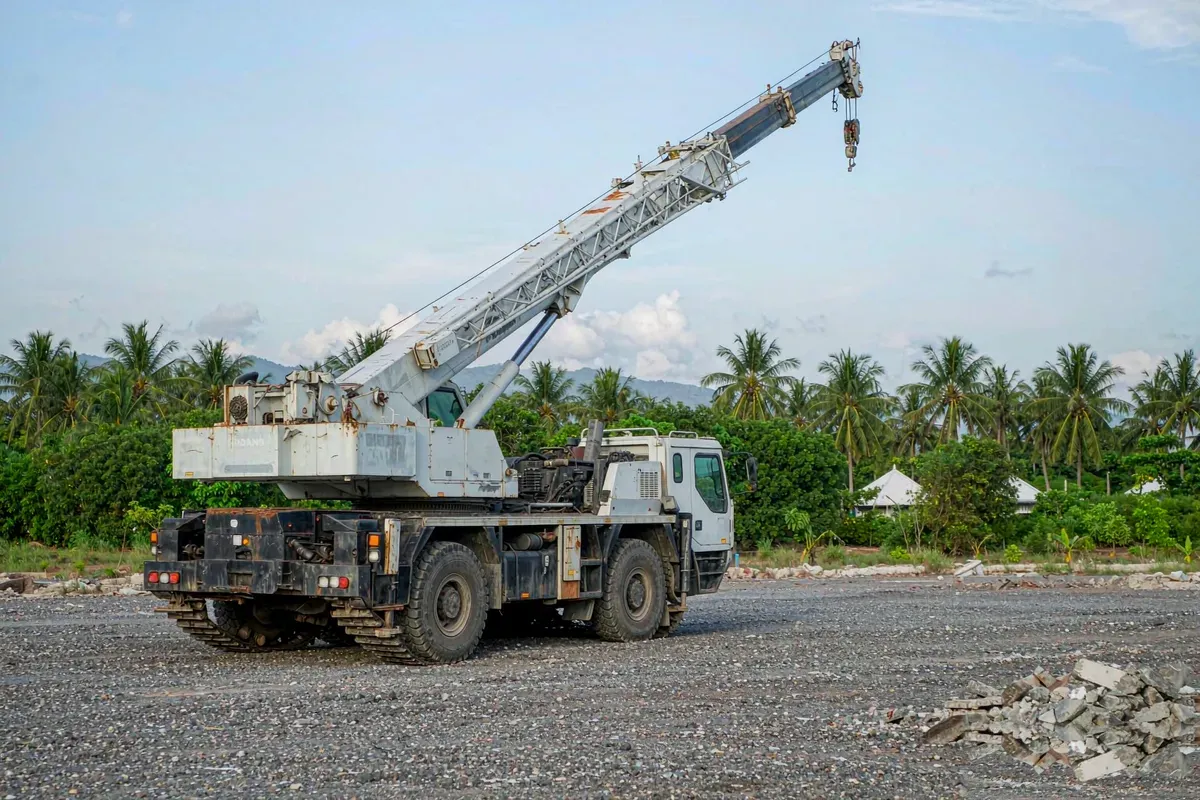
Crane position, reach and the space around the unit
Ask the lifting contractor two questions early: where will the crane stand, and what radius does it need to work at. The answers often change the site design. A crane that can stand close to the pad needs less capacity and less ground preparation; one forced to work over an obstruction needs a larger machine, more space and better ground. Where the unit is placed behind a building, over a slope or beyond a retaining wall, the reach requirement grows quickly.
Beyond the crane, allow working space on all sides of the unit once it is set. Crews need room to guide the load, to connect services, to fit the deck and stair, and to bring materials in afterwards. A pad dimensioned exactly to the unit footprint produces a site where every subsequent trade works from a ladder.
Community and barangay coordination
Access in the Philippines frequently crosses land or roads that are not exclusively the owner's. Barangay roads, private tracks, easements across neighbouring lots and shared resort entrances all involve somebody whose consent matters. Practical steps:
- Confirm in writing, from the barangay or the private owner, that the route may be used by heavy vehicles, and whether any conditions or restoration obligations apply.
- Agree the delivery window in advance and notify the neighbours, particularly where the route passes dwellings or a resort in operation.
- Agree who restores what: a verges, a fence removed for the gate, a culvert bypassed, and the reinstatement standard expected.
- Keep the agreement to the agreed hours. A delivery that overruns into the evening generates complaints that affect the next one.
What the site must have ready before the truck is booked
Treat site readiness as a gate in the programme. Before the shipping date is confirmed, the following should be demonstrably complete, not merely planned:
- Pad or foundation complete, cured where applicable, and verified level and to setting-out tolerance.
- Access track constructed or upgraded to the standard the survey identified, with any crossing works finished.
- Crane standing area prepared and confirmed in writing by the lifting contractor.
- Staging area available, or a documented transfer plan with the plant identified.
- Overhead obstructions resolved with the utility, or the route re-selected.
- Community and barangay permissions in hand.
- Service stubs present at the correct location, so that the unit can be connected rather than staged again.
- Site contact named, with authority to accept delivery and sign the handover documents.
Working backwards from this checklist is the practical way to set a shipping date. The unit should leave the factory when the site is ready, not when the factory is ready. Getting that order right removes most of the cost and most of the argument from the last mile, and it is the least costly risk reduction available on a Philippine capsule house project.
More from the Blog

Capsule Home Cost Guide: What You Really Pay in 2026
EXW, shipping, install and the hidden line items — a transparent breakdown of total landed cost.
Read article →
How to Install a Capsule Home in 3 Days: A Step-by-Step Guide
From site prep to first guest — the exact sequence our install crews follow on every deployment.
Read article →
Real Owners, Real Numbers: Success Stories
How a lakeside resort, a Spanish glamping site and a Singapore dealer hit their targets.
Read stories →Talk to the Factory
Ready to Ride the 2026 Wave?
Get the latest catalog, pricing tiers and a layout sketch for your land — straight from the engineering team.