Modular vs Manufactured Homes: Key Differences
Modular vs manufactured home: which authority reviews, how relocation changes the category, how lenders and insurers treat it, and the documents to request.

A modular home and a manufactured home can leave the same factory, use the same wall build-up, and look identical in a photograph. They are still two different legal categories, and the difference is not in the building — it is in which authority reviews it, what it can be moved to later, and how a lender or insurer will treat it. If you are buying one, that distinction will affect you more than any specification line. This page covers the buyer-facing consequences only. Terminology across the two families is set out on our modular terminology page, certificates and what to request from a supplier on our capsule house certification page, and commercial structure on our capsule house price page. Nothing here is legal advice for a specific property, and no price figures appear on this page.
Two Categories, Two Review Authorities
The cleanest way to hold the distinction in your head is to ask one question: who signed off the design before the unit was built?
- Manufactured housing is reviewed against a single national standard that the producing country administers centrally. Compliance is evidenced by a certification label affixed in the factory and by a data plate inside the unit. The local authority at the destination generally does not re-review the structural design, because it was already reviewed at national level.
- Modular housing is reviewed against the building code in force where the building will stand. Approval is obtained locally, by the authority that has jurisdiction over the site, and the building is assessed as a building on land — not as a vehicle-derived product.
Everything downstream follows from that. A nationally reviewed unit is portable in a legal sense, because the standard it was built to travels with it. A locally approved modular building is a fixture of the land it was approved for, because the approval was issued for a specific address. Confirm the classification of the specific unit you are buying with the authority having jurisdiction at the site address. Requirements may vary by application, market and applicable standard.
What the Difference Does to Finance
Lenders treat the two categories differently, and the reason is security. A lender advances money against an asset it can realise if the loan fails.
- Real property classification. A modular home approved and permanently affixed to owned land is normally financed as real property, on the terms a conventional mortgage would offer for a site-built dwelling of similar value.
- Chattel classification. A manufactured home not converted to real property is often financed as personal property, on a different instrument with different term lengths, rate structures and down payment expectations.
- Land tenure. If the home sits on leased land, the security question is harder regardless of category, and the lease itself becomes a document the lender will read closely.
The practical instruction for a buyer is simple: before you commit to a unit, ask the lender which classification it will use for the specific serial number and the specific site, and get it in writing. Do this before the order is placed, not after delivery. The classification can be changed in many jurisdictions through a defined conversion process — typically involving surrender of the title document and recording of an affixture declaration — but the process, its cost and its availability are local matters to confirm with the authority having jurisdiction. Requirements may vary by application, market and applicable standard.
What the Difference Does to Insurance
Insurers follow the same classification logic, for the same reason, and usually at least two distinct policy shapes are available for each category.
- A dwelling policy written for a permanently sited, real-property home tends to be rated and structured like a homeowner policy.
- A manufactured home policy is its own product line, commonly written with its own valuation basis and its own named-peril or open-peril options.
- Transit and installation cover sits separately in both cases. It covers the unit while it is being moved and craned, and it is the cover most often forgotten, because neither the factory nor the buyer assumes it by default.
Ask the insurer three specific questions: what basis the policy settles on if the unit is a total loss, whether transit and craneage are inside the policy or excluded, and whether the policy responds during the period between delivery and final occupancy. That third period — the unit is on site, connected, and not yet occupied — is when the most claims happen and when the most arguments about coverage start.
Relocation: The Consequence People Discover Late
The categories diverge most sharply when the owner wants to move the building.
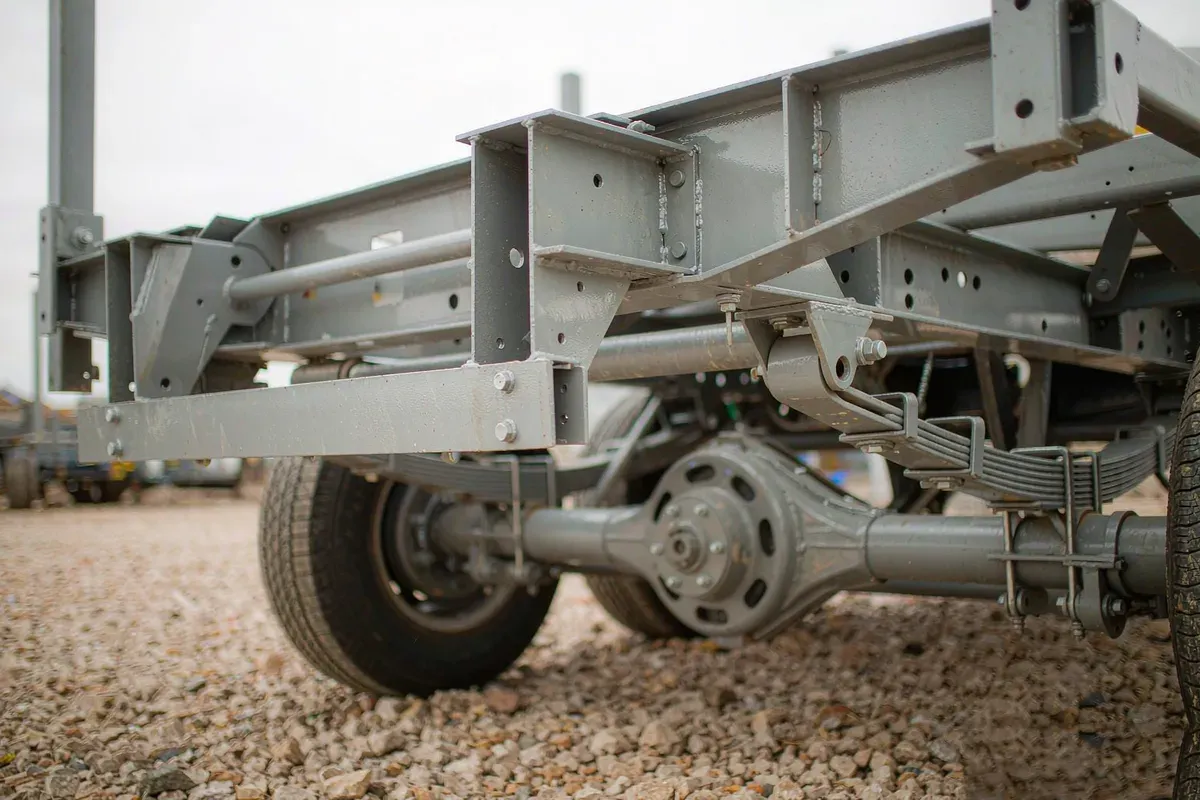
- A unit built to the national standard was designed to be moved. It retains a chassis or a transport frame, it has a serial number that travels with it, and re-siting to another location within the same regulatory regime is an anticipated event.
- A modular building approved for a specific address was not designed to be moved. It can frequently be relocated physically, but the act of moving it takes it outside the approval it was built under, and re-approval at the new address is a new process, not a formality.
There is also a physical asymmetry. The modular unit usually has no permanent chassis, so moving it means temporary transport frames, spreader beams and a lifting plan drawn for that specific job. The manufactured unit has its own frame and axles, so the move is closer to a conventional heavy haul. If you expect to move the building within its service life, say so before you order, because it changes both the product and the paperwork. Our terminology page covers how the structural descriptions differ between the two families.
Documentation to Request From the Supplier
Whatever category you are buying, request the document set in writing and check that each item is issued by a named body rather than asserted by the seller. The set that matters to a buyer:
- The certification label or compliance mark for the factory build, and the identity of the body that issued it.
- The data plate or serial record, with the unit identification that the authority and the lender will both reference.
- The installation manual and the lifting or transport instructions issued for that specific model.
- The foundation and anchoring design basis, and who sealed it if it was professionally prepared.
- The electrical and plumbing compliance documentation applicable at the destination, issued at the correct stage of the project.
- The transport and packing list, with dimensions and weights for the permit application.
- The warranty, written as a single document stating what is covered, for how long, and who performs the remedy.
Treat any certificate presented as a scanned image without an issuing body name, a standard reference and a date as unverified. Request the original and confirm it with the issuer. Our certification page sets out that verification process in more detail. Requirements may vary by application, market and applicable standard.

Reading the Labels in a Showroom
A buyer standing on a dealer lot can usually tell the categories apart without asking, using physical evidence rather than paperwork. A unit retaining visible axles, a tow tongue and a steel perimeter frame is almost certainly the nationally standardised category. A unit sitting on a perimeter foundation or on piers, with no transport frame retained and with its services exiting through the floor to fixed connection points, was built as a building. Where a unit is presented as modular, ask to see the approval that was issued for it and check that the address on that approval matches the address where it will stand. If the two do not match, the category you are being sold is not the one you think you are buying.
That is the whole distinction in one test. It is worth five minutes on a lot, because the consequences of getting it wrong are financial, legal and difficult to reverse after the crane has left.
More from the Blog

Capsule Home Cost Guide: What You Really Pay in 2026
EXW, shipping, install and the hidden line items — a transparent breakdown of total landed cost.
Read article →
How to Install a Capsule Home in 3 Days: A Step-by-Step Guide
From site prep to first guest — the exact sequence our install crews follow on every deployment.
Read article →
Real Owners, Real Numbers: Success Stories
How a lakeside resort, a Spanish glamping site and a Singapore dealer hit their targets.
Read stories →Talk to the Factory
Ready to Ride the 2026 Wave?
Get the latest catalog, pricing tiers and a layout sketch for your land — straight from the engineering team.